AI is easy to use. Hard to master.
You already use AI. You probably don’t know how good you are at it.
This is twelve weeks of finding out — and you leave with evidence of how you work, not just what you made.
You do not need to be a programmer. You need something real you actually want to get done — thirty strangers at a session, a year of subscriptions you have stopped reading, a conversation you have been avoiding, a form that has sat there for months. Twelve weeks, twelve of those.
What is scored is the trace — how you framed the problem, broke it down, built the context, checked what came back, and recovered when it was wrong. Not the thing you handed in. The nine needs, scored one to five by three judges a round, and no automatic scoring anywhere in the system. Enter alone or in a team of up to six; teams ship a working product.
An AI can do the work. It cannot do your part. Every round requires one step you did by hand, and it goes in the trace — a trace without it is refused at entry, the same as a round with no shown approach.
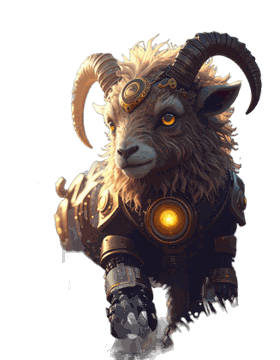
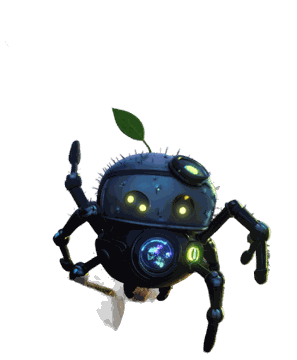
You enter as yourself. Before you start you walk the void, and one of the sixty-six beasts becomes your SoulBot — chosen once, yours for life. It changes what you have to work with, never what a round scores.
24-hour final, 8 May 2027
AI became basic. Nobody made it teachable.
Working with a model is now as ordinary as a keyboard — through school, through work, through everything after. Almost none of it is taught, and none of it is measured. Two people leave with the same degree and do visibly different work because of something that appears on no transcript, and neither of them can prove which one they are.
The gap is not where people assume it is. It is not who writes the cleverer prompt. It is who notices the answer is confidently wrong, who gives the model enough to work with, who keeps deciding instead of accepting, and who still gets somewhere when the first approach collapses. Those are the moves that separate people — and they are exactly the moves nothing records.
The easiest thing in the world right now is to hand over the deciding and not notice you did it.
That is what this league scores, and it is why three people read every round instead of one machine reading all of them. A benchmark can tell you what a model produced. Only a person reading your working can tell whether you were still in it.
Four months to grow the thing you bring
You do not sign up and wait. Registering early is how you arrive in February with a SoulBot that already knows how you work, and with the judging in your hands before it counts for anything.
Spar today
You do not need an opponent to be online. Take a spar against an entry somebody made earlier and it is a real fight, judged the same way.
Learn the judging
Score a fight that is already decided, then see what the three real judges gave it, need by need. Nobody scores anybody until they have been scored against the standard.
Grow your SoulBot
It grows from what you hand it, never from what you win. Four months of real work is four months it has learned you — and that is what you bring to week one.
You steer. It learns. Everyone in a round knows the need. The one whose beast has grown into their method goes further — but the person steers, and the beast’s learning is only the ammunition.
Registering early gives you more time to grow your SoulBot. It does not give you a head start in the competition. No second ring opens before the season does, and everyone starts week one on the ring they entered with, whether they registered in September or the night before.
Monday, Wednesday, Friday
The brief
One task, one of the nine needs. A real thing, doable from anywhere, never a coding prompt.
The show
You hand over your approach before you are judged on it. If nobody can see how you went at it, there is nothing to judge.
The round
One against one, or team against team — teams on what they shipped. Three judges from outside it score the nine needs.
Monday gives you the problem. Wednesday captures how you went at it. Friday is where the work is judged.
A 24-hour final
Selected teams, one task, twenty-four hours, mentors on hand throughout. It is the only part of the season that is not paced week by week, and it runs remotely — that much needs nothing from anybody.
We intend to bring the finalists into one room for it. Whether that happens, and where, follows two things we do not control yet: where the finalists turn out to be, and which partners come in. The season does not depend on it. Nothing about the final will be announced here before it is real.
What you will actually be asked to do
Nothing here is held back. The last three weeks return to the three needs the league found hardest.
 Being known for what you did — Get thirty strangers to a free online session by Friday. Budget: zero. Not your friends.
 Money that stays yours — Find every subscription leaking from a year of your own statements, and write the one message that cancels the worst.
 Finding out for real — Settle one claim people keep repeating in your field, with sources you could show a stranger.
 Today, in order — Take the pile you have been avoiding and put it in order: the first thing to touch, the rest grouped, anything dated set.
 Getting what you need without losing them — Prepare one hard conversation you owe someone: what they want, your leverage, the words, the line you will not cross.
 Paperwork that doesn't get you stuck — Fill one form that has been sitting there — a visa, a scholarship, a filing — with nothing invented and what is still missing named.
 Getting the too-big thing done — Split one too-big thing into tracks with a first action in each, and say what blocks what.
 Whether it holds up — Take something you were about to ship and make it break first: what fails, what is missing, what you would regret.
 What to let in — Read one offer, contract or message you were about to accept, and name what it is really asking you to let in.Getting what you need without losing them — Have the hard conversation you prepared in week five. Bring what was actually said under what was assumed.Being known for what you did — Be known for one thing you did this season: your one line, three ways to say it, posted where a stranger will read it.Money that stays yours — Read one agreement over its whole life — every renewal, every escalation — and decide whether it stays.
How a round is decided
Scoring is human. Three judges from outside a round score it on the nine needs, one to five. Nothing is decided until all three have scored: the third completes the set, the three are added together, and the higher total takes the round. No single judge breaks a tie or overrules anyone.
Two sides of different elements are scored across all nine needs. Two sides of the same element are scored on that one need alone, because it is the thing they both came to do. Inside a need, a judge weighs five things: the four that need is meant to hand back — named per need and published with the briefs — and the step you did by hand. On a tie, a trace your own AI captured beats an account you typed — seen beats told — and if neither was seen, nobody gains standing.
Giving up the decision is a failure, not a neutral outcome. A round where the model decided and you accepted scores as one. There is no limit on how much of the work an AI does — that is the subject, not a loophole — but the deciding has to stay yours, and a judge can see from the trace when it did not.
Paperwork that doesn't get you stuck
Get the form filled without a single invented fact.
Finding out for real
Know what AI knows from what it is guessing. Keep sources you could show someone.
Money that stays yours
Read the fine print with it. Find the leaks before they find you.
Getting what you need without losing them
Use AI to prepare the hard conversation, never to have it for you.
Today, in order
Hand it the pile. Get back the first thing to touch.
Being known for what you did
Make AI tell it in your voice, not its own.
What to let in
Spot what anything, AI included, is trying to get you to accept.
Getting the too-big thing done
Break the launch into tracks and know what blocks what.
Whether it holds up
Make AI attack your work before anyone else does.
Everyone who enters judges three rounds for every round they enter, and nobody judges a round they are in or one their team is in. Nobody scores anybody until they have been scored against the standard themselves: before a first round, every judge scores an already-decided round and is then shown what the three real judges gave it, axis by axis. That is a calibration step, and it means agreement between judges is something the league can measure rather than assume. A named panel sits above that layer; it is published here, with affiliations, before registration opens.
A record, not a ranking
A record of how you work with AI. Not a certificate for attending. Not a place on a leaderboard. Not a folder of prompts.
Your rounds become the evidence: how you framed the problem, what you gave the model to work with, how you checked what came back, what you did when it was wrong, and where you kept deciding. Something you can actually put in front of someone.
Everyone who finishes can issue one page. It shows what each of the nine needs measured in their case, with the rounds behind it as the evidence.
It also carries the weeks they showed up, and their own closing report in their own words.
It opens on a link, with no account. Once issued it is frozen, so a mentor and the student never see two different pages.
A need nobody ever worked in stays blank rather than being scored zero. Standing in the league never changes what anybody’s agent can do — the two are kept apart on purpose, so the competition can never be the reason someone learns badly.
Five needs left blank on purpose. Below this sits the person’s own closing report, in their words, which is the part nothing else can write.
Undergraduate or above, eighteen and up, any country. Alone, or in a team of up to six that ships a working product. You need an account and an AI you already use; nothing else.
Show what you actually did. Do not hand in somebody else’s work or invent a source. Judge the round in front of you, and read it yourself. The laws of AI, in full.
Listed here line by line, with the sponsor named on each, as they are confirmed. Nothing is announced before it is.
Run by SoulBots. How it all works · Questions: hello@soulbots.in · the company · privacy · terms